1. Foundational Concepts and the Unified Principle of the Encoder
1.1 Unified Definition: The Core Component for Information Conversion and Digital Standardization
The Encoder plays an indispensable role across diverse technical fields, including digital electronics, signal processing, automation control, and deep learning. Broadly speaking, an Encoder is a functional unit or algorithm whose core responsibility is to convert information from one format or code into another.
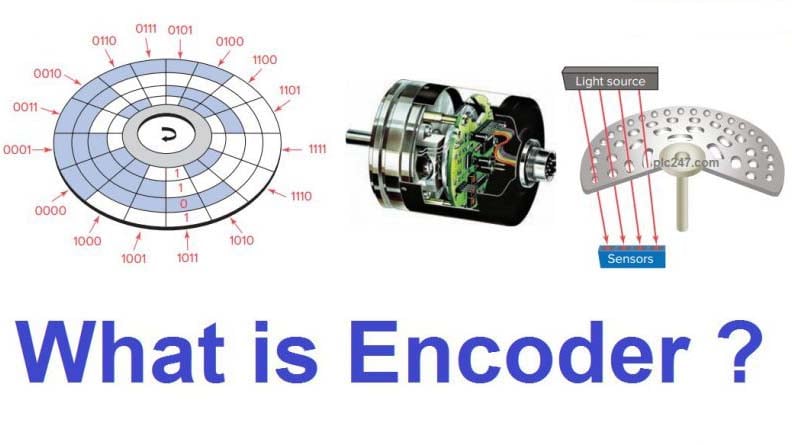
The primary objective of this information transformation is to convert raw, non-standardized input—whether continuous physical motion, complex raw data, or high-dimensional sensor signals—into standardized electronic data or abstract vectors that can be precisely processed by downstream digital systems.
Encoders are critical because they achieve several key goals: enabling system standardization, dramatically increasing data processing speed, facilitating data compression, and ensuring precise control of systems. In modern technology, the Encoder acts as the crucial bridge connecting the physical world to the digital world. They translate mechanical movement into readable electronic data, which is essential for tasks demanding high accuracy, such as industrial assembly lines and complex surgical robotics.
Analyzing the function of all encoders reveals their unifying principle: making information both computable and controllable. Whether converting analog mechanical rotation into discrete counts (pulses) or transforming lengthy, statistically redundant text sequences into dense, de-redundified semantic vectors, the inherent nature of the Encoder is to perform an operation of "standardized abstraction". This shared abstraction layer is what makes cross-system control and efficient digital processing possible.
1.2 Encoder Function Taxonomy: Transformation, Compression, Error Correction, and Representation Learning
While all encoders involve some form of information conversion, they can be categorized into three major academic and engineering domains based on their specific application and functional goal:
Electromechanical Encoding (Motion Control): In this field, the encoder serves as a motion feedback device. It converts physical quantities (such as position and velocity) into digital feedback signals essential for closed-loop control systems. These encoders typically employ optical, magnetic, or resistive sensing technologies, commonly known as Rotary or Linear Encoders.
Digital Communication Encoding (Data Transmission): Encoders here are designed to optimize the transmission of data. They are further divided into:
Source Coding: Primarily focused on maximizing data transmission efficiency by achieving data compression.
Channel Coding: Dedicated to improving data transmission reliability by implementing error correction codes (ECC).
Artificial Intelligence Encoding (Deep Learning): Within modern deep learning architectures (like Transformer and Seq2Seq models), the AI Encoder is the key to feature representation learning. It transforms input data into a low-dimensional, abstract feature vector housed within the Latent Space.
2. Electromechanical Encoders: Feedback Components in Automation and Control Systems
2.1 The Physical Mechanism: Converting Rotary Motion to Digital Feedback
Electromechanical encoders, particularly the rotary encoder, are mechatronic devices specifically designed to read the position of a rotating component, like a motor shaft, and generate an electrical output signal corresponding to that position. In modern industry, they are considered the "eyes" of motion control systems, providing the necessary closed-loop feedback.
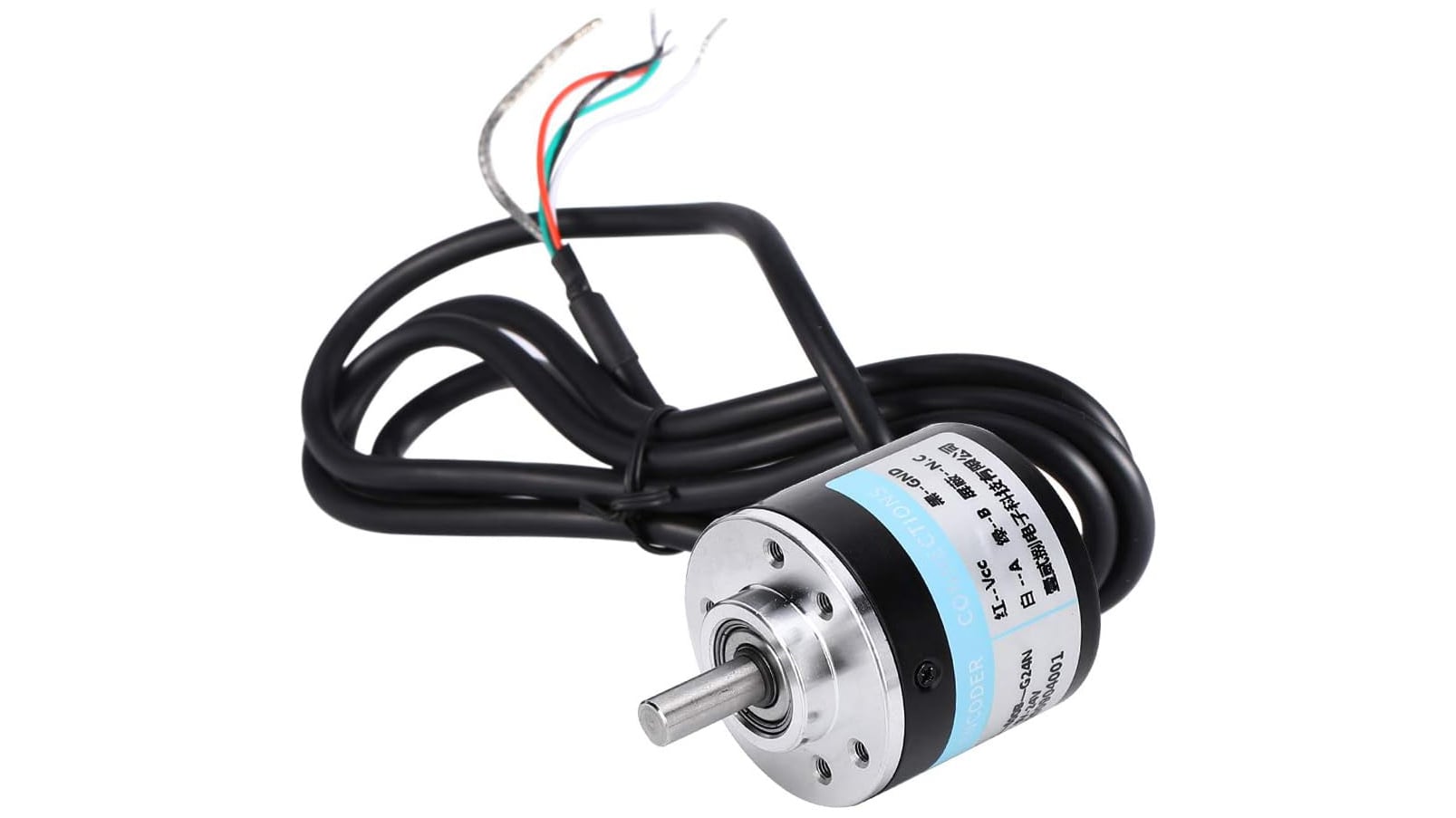
This conversion capability is crucial for applications that demand high precision. For instance, in robotics, to achieve highly coordinated servo motor control, the encoder must precisely inform the system of the shaft’s current position. Encoders also provide real-time feedback during load changes: when the system detects an increased load causing a drop in motor speed, the encoder sends a signal, prompting the system to supply more power to the motor and maintain a consistent target speed.
2.2 Output Classification: Incremental vs. Absolute Encoders
Based on the type of digital signal they output, rotary encoders are primarily categorized into two types, incremental and absolute, which have significant differences in function and application:
Incremental Rotary Encoders
Incremental encoders transmit information about the relative motion of the shaft, including rotation speed, position, or direction, often expressed as Counts Per Revolution (CPR). They work by outputting pulses (typically on A and B phases) that require an external counter to track. Some incremental encoders also include an index channel for component synchronization or for counting the total number of shaft revolutions. The main drawback of an incremental encoder is that if power is lost, the system loses all count data, necessitating a "homing" or re-zeroing operation to re-establish its position.
Absolute Rotary Encoders
Absolute encoders transmit a unique digital signal corresponding to the shaft’s current absolute position. This design allows them to record not only the shaft’s rotation speed and direction but also its exact position at any point during operation. This feature holds significant importance in control theory and system safety.
The memory function of absolute encoders (i.e., not relying on power to maintain position information) is driven by the demand for greater system robustness and safety. In critical applications within heavy industry, the military, or aerospace, if the power system is interrupted, the control system must know the precise physical location of the equipment immediately upon power restoration. Since absolute encoders retain position information, they eliminate the need for a time-consuming and potentially hazardous homing operation. While absolute encoders generally require more complex code discs or magnetic arrays, leading to higher cost and complexity, the robustness they provide makes them the standard choice for mission-critical applications. Furthermore, with the rise of the Industrial Internet of Things (IIoT), absolute encoders are increasingly adopting industrial Ethernet protocols like EtherCAT and PROFINET for seamless integration of position information into modern control infrastructures.
The following table summarizes the key differences between the two types of encoders:
| Feature | Incremental Encoder | Absolute Encoder |
|---|
| Main Output | Counts Per Revolution (CPR), speed, direction. | A unique digital signal corresponding to the current angular position. |
| Output Type | Pulses (requires an external counter). | Encoded value (e.g., SSI, Fieldbus). |
| Power Loss Recovery | Position is unknown after power loss (must be re-homed). | Position is immediately retained upon power restoration. |
| Complexity & Cost | Simpler mechanism, lower cost. | Requires a complex code disc/magnetic array, higher cost. |
2.3 Sensing Technologies: Optical vs. Magnetic Principles Explained
Electromechanical encoders primarily rely on either magnetic or optical technology to sense the position of the rotating component.
Magnetic Rotary Encoders
Magnetic encoders work by using a magnetized wheel attached to the shaft. As the shaft rotates, magnetic sensors attached to the component housing read the position of the magnetized wheel.
Optical Rotary Encoders
Optical encoders use light to track the shaft’s motion and are generally categorized as transmissive or reflective:
Transmissive Optical Encoders: Use a patterned disk. As the shaft and disk rotate, light from an LED shines through the patterns on the disk, and a photodetector records the resulting light, generating Counts Per Revolution (CPR).
Reflective Optical Encoders: Operate similarly, but light doesn't pass through the disk. Instead, the disk reflects light back to a sensor located on the same side as the emitter. A key advantage of this reflective design is that it allows for a more compact encoder footprint.
The choice of sensing technology is a trade-off between functionality and environmental robustness. Generally, optical encoders can offer extremely high resolution, but due to the nature of their sensors and optical disks, they are susceptible to environmental contaminants like dust, oil, or moisture. In contrast, magnetic encoders are far more robust and resistant to interference in harsh industrial environments with high dust, humidity, or vibration. Therefore, designers must carefully choose the most suitable encoder technology based on the application scenario (e.g., a clean room versus a heavy-duty factory floor).
3. Digital Communication Encoders: The Dual Standard of Efficiency and Reliability
In the realm of digital communication, the primary role of the encoder is to optimize data for transmission across potentially unreliable communication channels with maximum efficiency and integrity. This task is accomplished through two primary and coordinated functions: Source Coding and Channel Coding.
3.1 Encoder Responsibilities in the Communication Model
Encoders in a digital communication system ensure that the data stream is both efficient and reliable during transmission. Source Coding focuses on data compression to boost transmission efficiency, while Channel Coding concentrates on guaranteeing data integrity by adding controlled redundancy. These two processes work in concert to optimize the overall data transmission efficiency and reliability in modern communication systems.
3.2 Source Coding Encoders: Data Compression and Maximized Efficiency
Source coding, also known as data compression, aims to minimize the amount of data required for transmission by eliminating redundancy within the data. Its goal is to represent the same information using the fewest possible bits.
Source coding operates by analyzing the structure of the data to select the most efficient representation. This can take two main forms: lossless compression (where all original data is retained, such as in ZIP or PNG files) or lossy compression (where less important information is discarded to achieve higher compression ratios, such as in JPEG or MP3 files).
The Mechanism of Huffman Coding
As a classic example of lossless compression, Huffman Coding is a greedy algorithm-based technique that constructs a Huffman tree based on the frequency of character occurrence in the input string. The specific mechanism dictates that characters appearing more frequently are assigned shorter binary codes. For example, in a string containing 'A' (4 occurrences), 'B' (3 times), 'C' (1 time), and a space (2 times), 'A' might be encoded as 000. Through this frequency-matching method, Huffman Coding reduces the average number of bits required for transmission overall, thereby minimizing the data size.
The efficiency limits of Source Coding are governed by Shannon's Entropy in information theory. Techniques like Huffman Coding eliminate statistical redundancy (the unevenness in character frequency or sequence correlation) within the data, causing the average bit length of the encoded stream to approach the theoretical entropy of the information. Once statistical redundancy is effectively eliminated, the data’s inherent resilience to random errors is reduced.
3.3 Channel Coding Encoders: Data Protection and Error Control
The objective of Channel Coding is exactly the opposite of Source Coding: it aims to protect data by adding controlled redundancy, allowing it to withstand errors caused by interference, fading, or noise that may occur in the communication channel (e.g., radio or optical fiber). The goal of Channel Coding is to enhance the transmission reliability of data over noisy channels, ensuring that even if some bits are corrupted, the data can be detected and even corrected at the receiving end.
This work is accomplished through the introduction of error-correcting codes (ECCs). Common techniques include adding parity bits, checksums, or more complex codes such as Hamming codes, Turbo codes, or LDPC codes. These mechanisms allow the receiver to use the extra redundant information to determine if a transmission error occurred and, in some cases, reconstruct the original data.
Source Coding and Channel Coding together constitute a necessary "efficiency-reliability" trade-off. The more successfully Source Coding compresses the data, the closer the resulting data stream's statistical properties become to random, making the data more susceptible to errors. Therefore, highly efficient Source Coding necessitates the use of robust Channel Coding techniques to compensate for the intrinsic lack of robustness sacrificed during compression.
The table below provides a detailed comparison of the functions of these two types of encoders:
| Feature | Source Coding Encoder | Channel Coding Encoder |
|---|
| Primary Goal | Minimize data size (Efficiency). | Maximize data integrity (Reliability). |
| Operation on Data | Eliminates statistical redundancy. | Adds controlled, calculated redundancy. |
| Key Methods | Huffman, LZW, JPEG, RLE. | CRC, Parity Check, Hamming Codes, Turbo Codes. |
3.4 Core Channel Coding Mechanism: Cyclic Redundancy Check (CRC)
The Cyclic Redundancy Check (CRC) is a widely used error detection code in the data communication field and is a highly reliable technique for data validation.
Mathematical Foundation and Operating Principle
CRC encoding and decoding are based on rules defined by a Generator Polynomial (G(x)). The encoder treats the data block to be transmitted as a polynomial M(x) and performs a mathematical operation using the predetermined Generator Polynomial G(x) to produce a checksum, R(x). Common CRC polynomials include x5+x2+1 (CRC-5/USB) or x16+x15+x2+1 (CRC-16).
The core of the CRC operation is Modulo-2 Division. Unlike ordinary arithmetic division, Modulo-2 Division involves no borrowing and does not compare the numerical size of the divisor and dividend; instead, it uses the Exclusive OR (XOR) operation for corresponding binary digits. This mathematical choice has profound engineering significance: CRC selects Modulo-2 arithmetic as its foundation because the XOR operation is extremely simple to implement in digital logic circuits, operates at high speeds, and consumes minimal resources. This computational efficiency is the fundamental reason CRC is widely used as the core error-checking mechanism in high-speed networks, storage devices, and various data links. The CRC encoder is essentially performing a fast, hardware-friendly polynomial division.
The length (in bits) of the CRC code is always one bit less than the number of bits in the divisor polynomial used. Although CRC is primarily used for error detection rather than correction, it possesses powerful error detection capabilities, and under ideal transmission conditions, its bit error rate is extremely low, sufficient to effectively detect the vast majority of transmission errors.
4. Internationally Renowned Encoder Manufacturers
HEIDENHAIN
Description: A German company world-renowned for manufacturing high-precision optical linear scales, rotary encoders, and angular encoders. Their products are the industry benchmark in fields demanding extreme precision, such as machine tools, automation equipment, and metrology.
Key Products: Rotary encoders, angular encoders, and linear encoders (scales).
RENISHAW
Description: A British engineering technology company with a wide range of business in measurement, calibration, and motion control. They are also a notable encoder manufacturer, providing high-precision, non-contact magnetic and optical encoder solutions.
Key Products: Rotary encoders (including magnetic encoders from their associate company RLS) and linear encoders.
SICK
Description: A famous German provider of sensors and automation solutions with a comprehensive product line that includes various encoders for industrial automation and safety applications.
Key Products: Incremental encoders, absolute encoders (rotary and wire-draw), and functional safety encoders.
HENGSTLER
Description: A German company specializing in industrial counters, timers, and encoders. Their encoders are known for their robustness and high reliability, often used in harsh industrial environments.
Key Products: Rotary incremental and absolute encoders.
TURCK
Description: A German industrial automation company that provides comprehensive sensor, fieldbus, and connectivity solutions. Their encoder product line is extensive, performing exceptionally well in demanding environments.
Key Products: Rotary encoders (including hollow shaft and solid shaft), incremental and absolute encoders, supporting a variety of industrial communication protocols (e.g., CANopen, PROFINET, IO-Link).
Pepperl+Fuchs (P+F)
Description: A German expert in industrial sensors and explosion protection technology. Their encoders are mainly applied in hazardous area and intrinsic safety applications, as well as general industrial automation.
Key Products: Rotary encoders and wire-draw encoders.
SIKO
Description: A German company that primarily offers position and angle measurement technologies, including mechanical position indicators and various encoders. Their MagLine brand of magnetic encoders is known for being precise and wear-free.
Key Products: Rotary encoders and linear encoders (magnetic).
OMRON / Baumer / ifm and others
5. Conclusion and Future Outlook
Overall, the encoder will continue to play an irreplaceable role in shaping the next generation of automation, communication, and intelligent systems, serving as the critical link for transforming information from its non-standard forms into digitally computable and controllable formats.
The developmental trajectory of encoder technology is moving toward several key areas:
Higher Levels of Abstraction: Progressing from simple physical counting (as in rotary encoders) to deep semantic representation (as in deep learning encoders).
Enhanced Robustness: Achieving greater environmental resilience, particularly in harsh industrial and remote communication settings.
Deeper Integration: Moving toward seamless integration with emerging computing paradigms and protocols, such as industrial Ethernet (IIoT) and potentially quantum computing systems.
As digital systems become more pervasive, the demand for sophisticated, reliable, and efficient encoders to bridge the physical and abstract worlds will only intensify.
FAQ
What is the primary function of an encoder?
To perform information transformation, converting non-standard inputs (like motion or raw data) into standardized digital signals or abstract vectors.
Why are encoders essential in modern systems?
They are the critical bridge between the physical world and the digital world, enabling precise control, data compression, and efficient processing.
What is the main difference between an Incremental and Absolute Encoder?
Incremental Encoders provide relative position (pulse counts); Absolute Encoders provide unique absolute position even after power loss.
Which encoder type is better for harsh environments?
Magnetic Encoders are generally more robust and resistant to dust/vibration than high-resolution Optical Encoders.
What is the goal of Source Coding?
To maximize transmission efficiency by eliminating data redundancy, primarily through data compression (Huffman Coding).